My child is doing poorly at school: what should parents do, how can they find the reasons and help?
11/02/2026
9 minutes read
 Profi school
Every parent has encountered a situation at least once when their child doesn't want to study. They might be cranky in the morning, refuse to do homework, cry before school, or simply ignore everything related to studying. At such moments, anxiety arises: "What's wrong with them?", "How can I get them to do it?", "Will they fall behind?"
But before looking for solutions, it's important to understand why children don't want to study. The answer is rarely obvious. It could be fatigue, stress, conflict with the teacher, fear of failure, overload, or underlying difficulties like dyslexia. In this article, we won't just analyze the situation when a child doesn't want to study; we'll conduct an in-depth analysis of the causes and offer age-specific motivation strategies—from elementary school to graduation. You'll learn how to distinguish burnout from laziness, how to support a teenager during a crisis, and when it's time to seek professional help.
The phrase "the child doesn't want to study at all" often sounds like a death sentence. But there's almost always a hidden reason behind a reluctance to study:
Key takeaway: it's important to distinguish between situations where a person is tired and needs rest, and cases where they are afraid of difficulties or feel a lack of understanding from others. The solutions in these cases are fundamentally different. Therefore, before doing anything, it's important to understand the cause.
Many parents, faced with a child who is completely unwilling to study, make a number of serious mistakes:
None of these approaches work in the long term. They either create resistance, develop dependency, or leave the child alone to deal with the problem.
Instead, it's worth pursuing a constructive approach:
Motivation - helping children find meaning in learning and connect it to their interests.
Support - providing space for the expression of feelings and thoughts, creating an atmosphere of trust and comfort. Learning to listen to and respect each child's point of view, building partnerships.
Understanding age-related crises and needs is the key to effective support. What works for a first-grader may provoke a violent protest in a teenager, and a method suitable for a high school student will be incomprehensible to a younger student. Therefore, motivation strategies should be adapted to the child's developmental stage.
In elementary school, instances when a child absolutely refuses to study arise due to fatigue, difficulty concentrating, fear of making mistakes, or unpreparedness for the school workload. In first grade, learning behavior is not yet fully developed: the child doesn't understand why they need to sit and write when they want to play.
Solution:
Hormonal changes, self-discovery, rebellion against authority, the importance of social status—children and parents face these challenges in middle school. School is considered "meaningless," especially if it's not connected to their dreams.
What to do?
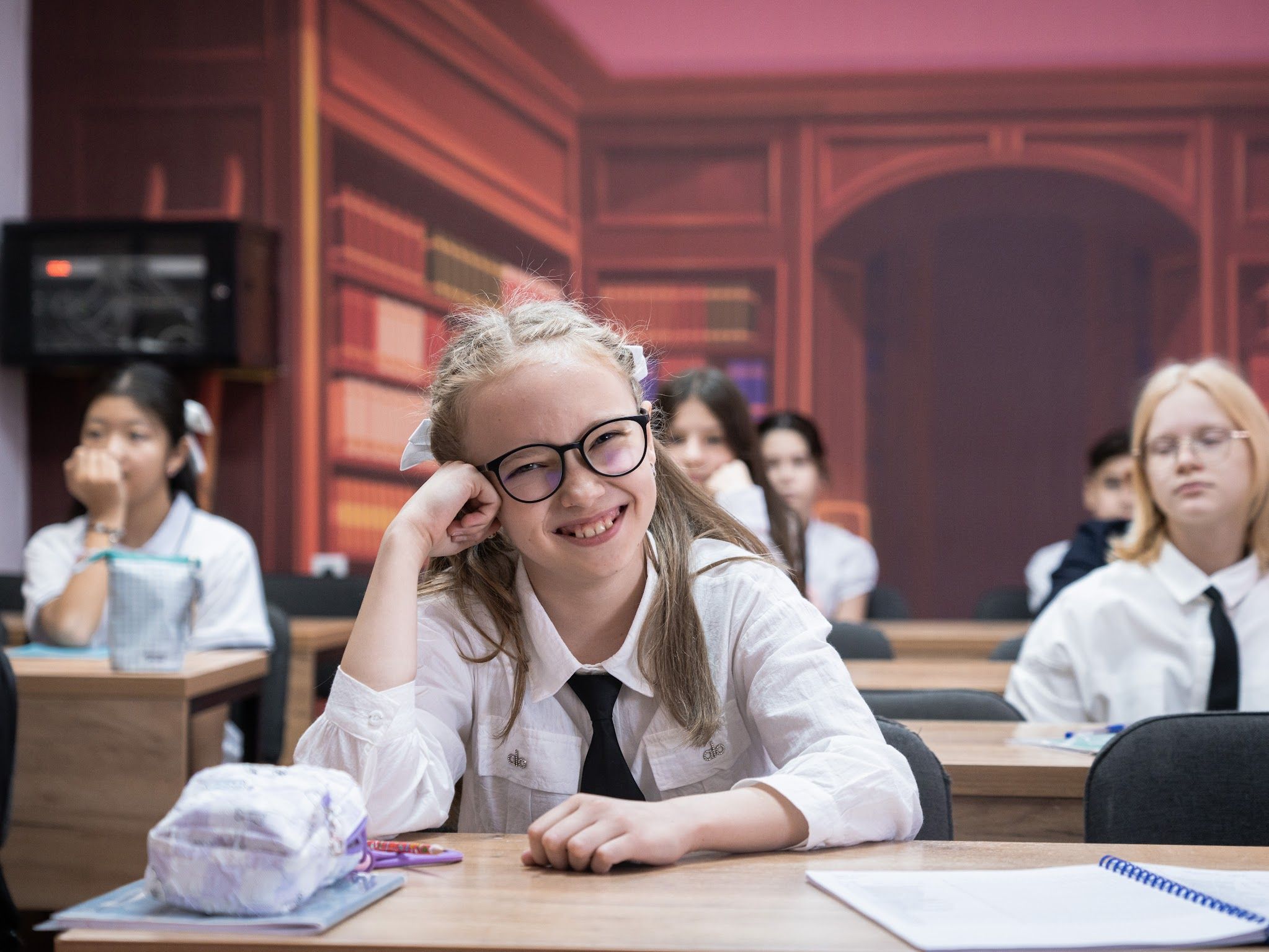
Burnout, stress, and exam anxiety—many graduating students begin to wonder, "Do I really need this?"
How can I help?
It is recommended to maintain an atmosphere of calm and understanding at home, avoiding excessive criticism and high expectations. It is important to help them independently discover their personal motivation and understand the importance of studying.
Practical tools: how to help here and now
When a child doesn't want to study, it is important to act calmly and purposefully, without anxiety or irritation. Start small—and one well-chosen step can trigger positive change:
Don't expect instant results. Change takes time.
And small progress is already progress. The key is to maintain trust and show the student that their parents are always on their side.
When is professional help needed?
A psychologist's recommendations will be essential in restoring emotional balance and academic motivation. Don't delay seeking help: timely support and professional advice can prevent chronic difficulties and restore interest in learning.
The problem of lack of desire to study is entirely solvable. The main task for parents is to identify the underlying cause and apply the right motivational methods. It's important to remember that collaboration, mutual respect, and flexibility are key factors for success.
It's worth starting with an open conversation, trying to hear their perspective and genuinely understand their concerns. A simple change in approach to homework or the involvement of additional resources will make learning enjoyable. Remember that the relationship with your son or daughter is much more important than current grades. Parental involvement, care, and support can dramatically change the situation and restore a lost thirst for knowledge.
At Profi School, our approach is based not on pressure and control, but on a deep understanding of each student.
We create a psychologically safe environment where mistakes are normal, asking questions is encouraged, and success is measured not only by grades but also by increased confidence, curiosity, and independence. Our teachers and school psychologist develop an individual educational path for each student, taking into account their pace, interests, strengths, and areas for growth. We don't force them to cram; we help them see the connection between learning and life, between today's lesson and tomorrow's dream.
If your child doesn't want to learn, the problem isn't with them; it's that the current educational environment doesn't meet their needs. Sometimes, all that's needed is a different atmosphere, different methods, a different attitude.
We invite you to a tour of Profi School. During the meeting, you'll get to know the private school, meet the teachers and students, see how classes are conducted, and experience the atmosphere in which children want to learn. We'll listen carefully to you, discuss your options, needs, and priorities, and during your first visit, we'll map out a possible educational path—one that's right for your family. Because everyone deserves to learn with passion, not through sheer force.
Application to the directorCopy of birth certificate (4 copies)Copy of identity document of parents or persons replacing them (4 pcs.)Medical recordPhotograph (size 3x4)Hepatitis A vaccination certificateTransfer slipKey to digital educational platform
At our school, the school day starts at 9:00 and ends at 17:00. The schedule is designed to provide a balance between intensive learning, rest and extracurricular activities:
Entrance exams to school are conducted in the form of testing among students in grades 6–9 in the exact, natural, and social sciences.
We work with a number of universities and organise meetings with their representatives to help students better understand the requirements and culture of the institutions.
The school accepts students from grades 1 to 11. Each grade has a specific admissions process, which includes an application, entrance exams, and a personal interview with the student.
Leave your phone number, and we will answer all your questions, or call us on our number!
+998 78-777-11-10